Casablanca – Morocco’s air transport sector continued its upward trajectory in the first four months of 2026, confirming sustained recovery and expansion across both passenger and cargo segments. According to data released by the Office National des Aéroports (ONDA), total passenger traffic reached 12.336 million travelers by the end of April 2026, marking a 9.7% increase compared with the same period in 2025.
The performance highlights the strengthening role of Morocco as a regional aviation hub, particularly through the dominance of Casablanca’s main airport and the continued expansion of international connectivity across multiple continents.
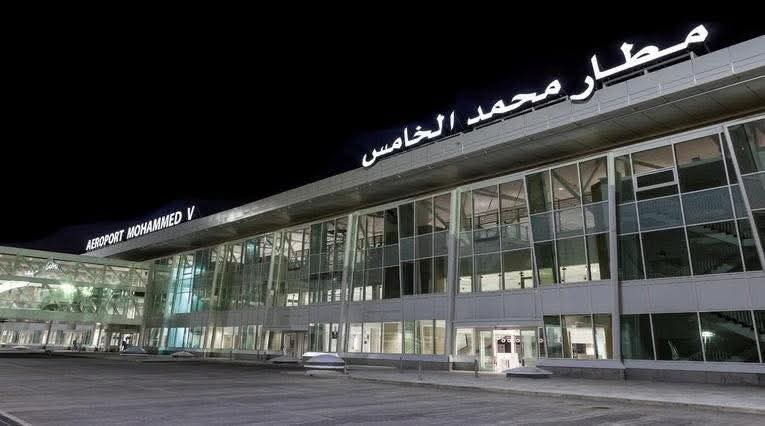
At the center of this growth is Mohammed V International Airport, which remains the country’s primary gateway and largest hub. The airport alone handled approximately 3.76 million passengers during the first four months of the year, representing more than 30% of total national air traffic. This figure reflects a robust annual increase of 12.6%, reinforcing Casablanca’s position as a key connector between Africa, Europe, and transatlantic routes.
The broader airport network across Morocco also recorded widespread growth, with nearly all major regional airports reporting positive performance. Among the strongest performers, Beni Mellal Airport posted the highest growth rate at 27.06%, albeit from a smaller base, while Moulay Ali Cherif Airport (Errachidia) followed with an 18.53% increase. These gains suggest improving domestic connectivity and growing regional mobility.
Larger and more established airports also continued their expansion trend. Rabat–Salé Airport recorded growth of 13.48%, supported by increased administrative and business travel flows linked to the capital region. In the north, Tangier Ibn Battouta Airport saw a 11.5% rise, reflecting the city’s expanding industrial and logistical importance.
Tourism-driven airports also contributed significantly to overall growth. Marrakesh Menara Airport registered an 10.81% increase, while Agadir Al Massira Airport grew by 10.27%. In the eastern region, Nador El Aroui Airport posted an 11.29% rise, supported by both diaspora travel and regional connectivity improvements.
Overall, ONDA attributes this sustained expansion primarily to international traffic, which continues to dominate Morocco’s aviation landscape. Of the total 12.33 million passengers recorded, more than 11.06 million traveled on international routes, representing a 9.54% increase year-on-year. Domestic traffic also contributed to growth, rising by 11.1% to approximately 1.27 million passengers.
Europe remains the backbone of Morocco’s international aviation market, accounting for more than 80% of total international passenger flows. Traffic between Morocco and European destinations increased by 9.64%, reflecting strong tourism exchanges, labor mobility, and business connections.
However, the most dynamic growth rates were observed on emerging and long-haul routes. Air traffic with Africa rose sharply by 19.61%, underlining Morocco’s expanding role as a continental hub linking West, Central, and North Africa. North American routes also recorded strong momentum, growing by 21.98%, supported by increasing demand for both tourism and diaspora travel.
Other markets showed mixed performance. Traffic with the Maghreb region increased by 13.65%, while South American connections surged by 41.24%, albeit from a lower base. In contrast, routes linking Morocco with the Middle East and Far East declined slightly by 4.62%, indicating a relative slowdown in those segments.
Beyond passenger transport, operational indicators also confirmed the sector’s expansion. Moroccan airports recorded 91,128 aircraft movements (take-offs and landings) by the end of April 2026, representing a 10.35% increase compared with the same period in 2025. This rise reflects both higher flight frequency and expanded airline capacity across key routes.
Air cargo activity also maintained a positive trajectory, reinforcing Morocco’s position in regional logistics networks. Freight volumes exceeded 39,515 tons, up 11.83% year-on-year from 35,334 tons recorded in the same period of 2025. This increase is consistent with broader trade growth and the rising importance of air freight in high-value and time-sensitive goods.
Taken together, the figures point to a steadily expanding aviation ecosystem supported by international connectivity, tourism recovery, and Morocco’s growing role as a strategic air transport hub. With continued investment in infrastructure and route development, the sector is positioned to maintain its growth momentum throughout 2026, particularly if international demand and airline capacity continue to expand at the current pace.