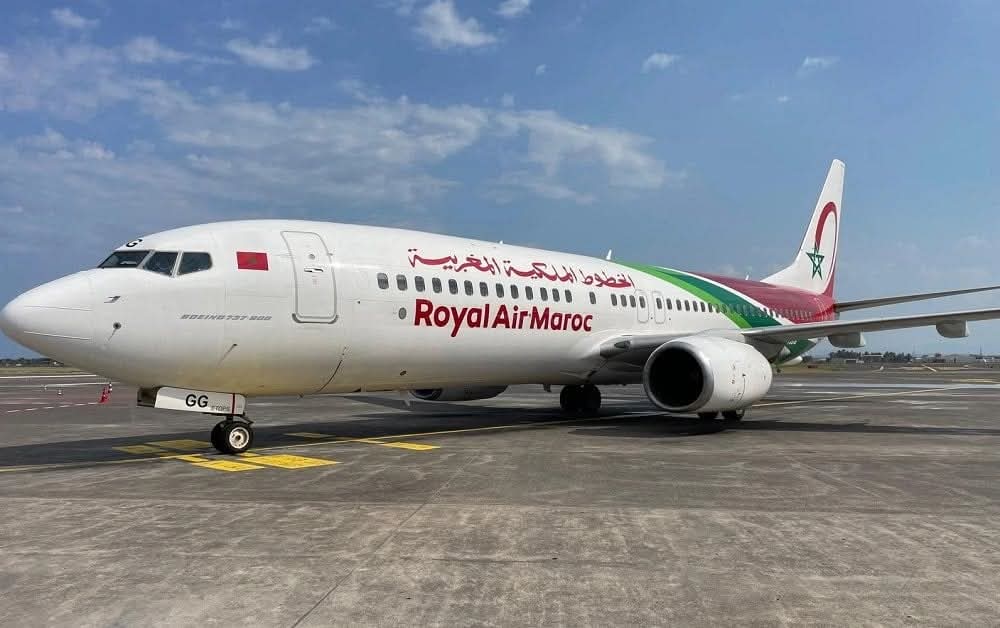
Casablanca – Royal Air Maroc (RAM) is significantly strengthening its presence in northern Morocco by launching six new direct international routes from Tangier and Nador to Spain and Germany, beginning in summer 2026. The expansion, part of the airline’s broader “point-to-point” strategy, aims to improve connectivity for both Moroccan residents and tourists while reinforcing Casablanca’s hub as a central gateway for global travel.
Strategic expansion in the north
Following the establishment of a new base in Tetouan earlier this year, RAM is now extending its medium-haul network across northern Morocco. Tangier will be connected to Malaga, Madrid, and Barcelona, while Nador will receive new services to Barcelona, Frankfurt, and Düsseldorf. These routes complement the airline’s existing network from Tetouan to Spain and from Casablanca to Bilbao and Alicante, creating a dense regional network with strong links to Europe.
The airline’s point-to-point strategy allows for direct connections between northern Moroccan cities and major European destinations without requiring passengers to transfer through Casablanca. This approach addresses rising demand from the Moroccan diaspora in Europe, particularly in Spain and Germany, and supports tourism growth along the northern Mediterranean coast.
Boosting tourism and economic links
These new routes are intended to strengthen Morocco’s tourism profile and enhance economic and human exchanges with Europe. The launch of direct connections from northern Morocco, combined with the recent opening of the Tetouan base, demonstrates Royal Air Maroc’s commitment to improving the country’s tourism appeal. The expansion also supports the airline’s long-term goal of becoming a global carrier while maintaining strong regional connectivity.
With these additions, nine Spanish cities—Madrid, Barcelona, Valencia, Malaga, Seville, Las Palmas, Tenerife, Bilbao, and Alicante—will be connected to five Moroccan cities: Casablanca, Laayoune, Tangier, Tetouan, and Nador. Together, these routes will provide more than 80 weekly flights between Morocco and Spain, establishing a robust air bridge across the Mediterranean.
Germany will also see improved connectivity, with Frankfurt, Düsseldorf, and Munich linked to Casablanca, Nador, and Oujda through over 35 weekly flights. This expansion is expected to facilitate mobility for the Moroccan diaspora and support business, tourism, and family travel between the two countries.
Precise launch schedule
The new routes will begin operations in summer 2026, timed to coincide with peak travel periods for tourists and the Moroccan diaspora. The schedule is as follows:
- Tangier–Barcelona: Mondays and Fridays, from July 3, 2026 (Outbound 19:10, Return 22:50)
- Tangier–Malaga: Mondays and Fridays, from July 6, 2026 (Outbound 15:35, Return 18:20)
- Tangier–Madrid: Mondays and Saturdays, from September 7, 2026 (Outbound 10:50, Return 14:10)
- Nador–Frankfurt: Tuesdays, Thursdays, and Saturdays, from July 2, 2026 (Outbound 15:10, Return 20:10)
- Nador–Düsseldorf: Wednesdays, Thursdays, and Saturdays, from July 11, 2026 (Outbound 07:00, Return 12:05)
- Nador–Barcelona: Thursdays and Saturdays, from September 10, 2026 (Outbound 09:55, Return 13:30)
Tickets went on sale on February 10, 2026, through RAM’s website, call centers, airline offices, and travel agencies.
Reinforcing Casablanca and long-term growth
While these routes primarily strengthen direct connections in northern Morocco, they also feed passengers into the Casablanca hub, facilitating onward travel to Africa, the Middle East, and the Americas. This dual function supports RAM’s strategic plan to increase Morocco’s airport capacity to 80 million passengers by 2030 and consolidate Casablanca as a major intercontinental hub.
RAM also plans to expand further in 2026 with at least nine additional international routes and enhanced long-haul services, particularly to North America. The development of northern Morocco as a transport hub is considered a cornerstone of the airline’s growth strategy, complementing its efforts to strengthen Casablanca’s position as a global gateway.
Impact on tourism and regional development
The expansion is expected to boost tourism, business travel, and the mobility of Moroccan communities abroad. By providing more frequencies and direct routes, the airline aims to reduce pressure on traditional Casablanca connections, diversify travel options, and reinforce the economic integration of the northern regions. Authorities and tourism stakeholders in Tangier, Nador, and Tetouan anticipate a significant increase in international passenger traffic, particularly during the summer season.
With this move, Royal Air Maroc positions northern Morocco as a key entry point to Europe, strengthens Spain and Germany as strategic markets, and marks a major step in the country’s aviation and tourism development.