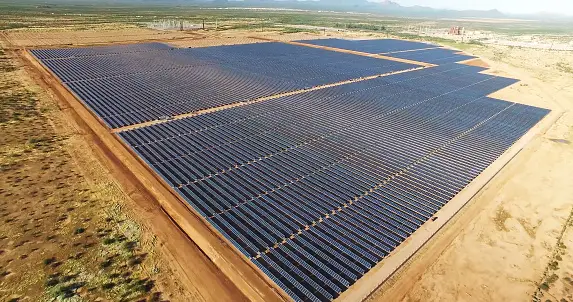
Casablanca – The OCP Group, Morocco’s leading phosphate producer, has marked a significant milestone in its green energy strategy with the launch of its largest solar photovoltaic (PV) network in the country. On December 1, 2025, the company’s subsidiary, OCP Green Energy (OGE), commissioned the first phase of its solar investment program, totaling 202 megawatts (MW) across three strategically located sites: Benguerir (67 MW), Foum Tizi (30 MW), and Oulad Farès near Khouribga (105 MW). The Oulad Farès plant now stands as Morocco’s largest operational solar PV facility.
This initiative represents a critical step in OCP’s broader energy transition roadmap, which aims to cover 100% of its energy needs from renewable sources by 2027 and achieve full carbon neutrality by 2040. The first phase signals the shift from planning to practical implementation, reinforcing OCP’s commitment to securing a sustainable and competitive energy supply for its industrial and mining operations.
Operational capacity and technical scope
The three solar plants are entirely photovoltaic, in contrast to Morocco’s Noor Ouarzazate solar complex, which primarily uses concentrated solar power (CSP) technology. The Oulad Farès site, with its 105 MW capacity, represents a landmark achievement in PV energy deployment within the country. Combined with the other two sites, the network now delivers 202 MW of clean electricity to OCP’s industrial and mining facilities, enhancing the company’s operational resilience and energy security.
A key component of this rollout is the integration of battery energy storage systems (BESS). A pilot storage facility in Benguerir, based on lithium-iron-phosphate (LFP) batteries with a capacity of 25 MW/125 MWh, is expected to be operational in 2026. The system will store solar energy generated during daylight hours for use during peak demand periods or low-sunlight intervals, increasing grid flexibility and ensuring continuous renewable energy supply. This pilot is part of OCP’s plan to develop 2 GWh of storage capacity post-2027.
Economic and strategic benefits
The solar PV network directly powers OCP’s mining and industrial operations, including the Green Water desalination plants, Specialty Products & Solutions (SPS) units, and Nutricrops facilities. According to OCP officials, the cost of renewable electricity generated by these facilities is approximately $38 per MWh, offering a major competitive advantage over conventional energy sources. This economic efficiency supports the company’s strategic objective of producing sustainable fertilizers tailored to local soil and crop needs while reducing overall energy expenses.
The initial phase of the project required an investment of $185 million, while the full program — including upcoming expansions and energy storage systems — is projected to reach $2.16 billion, with $1.24 billion expected to be committed by 2027.
International support and partnerships
The quality and scale of OGE’s projects have attracted international recognition and financing. In 2023, the International Finance Corporation (IFC), part of the World Bank Group, provided $108 million to support development. Additional funding has been provided by the African Development Bank (AfDB), Germany’s KfW Bank, and the Clean Technology Fund, targeting integrated water-energy solutions and innovative storage technologies. These partnerships highlight both the global relevance of OCP’s renewable initiatives and the confidence of international financiers in the company’s governance and technical capabilities.
Regulatory compliance and grid integration
The solar plants were developed under Morocco’s self-production of electricity framework and authorized by the Ministry of Energy Transition and Sustainable Development. They comply with regulations from the National Electricity Regulatory Authority (ANRE), ensuring proper access to the national grid. Connection agreements with the National Office of Electricity and Drinking Water (ONEE) allow for efficient transfer of electricity between production and consumption sites, optimizing energy use across OCP’s network.
Socioeconomic and environmental impact
OCP Green Energy emphasized the local and socio-economic benefits of the program. Moroccan companies were actively engaged in engineering, design, and construction stages, and local labor was employed extensively, ensuring that the project contributed to regional economic development. Environmentally, the solar PV and storage facilities align with international standards, supporting Morocco’s sustainable development goals and reducing the carbon footprint of industrial operations.
Looking ahead
With this first phase complete, OCP is positioning itself as a global leader in renewable energy integration within the phosphate industry. The company plans to expand its solar and storage capacity significantly, aiming to reach 1.2 GW of renewable energy by 2027 and exceed 2 GW in subsequent years. By coupling green energy production with industrial operations, OCP demonstrates a model of sustainable industrial growth, combining economic efficiency with environmental responsibility.
As Morocco continues to advance its renewable energy targets, OCP’s achievements illustrate how private-sector initiatives can complement national strategies, ensuring energy security, industrial competitiveness, and carbon neutrality in the decades to come.