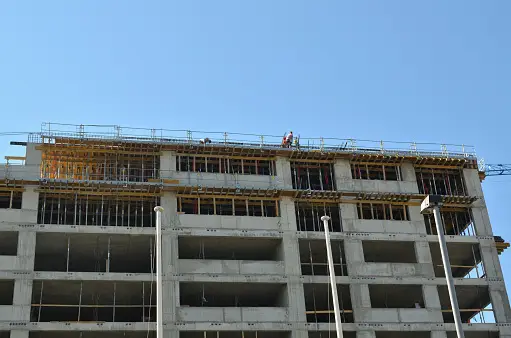
Casablanca – O Tower, the company responsible for developing Mohammed VI Tower in Salé, has significantly reinforced its financial base by increasing its share capital to approximately $672 million. The move reflects a strategic effort to support the project’s transition into its most technically demanding and cost-intensive stages, while maintaining financial stability in a challenging economic environment.
The capital increase, amounting to roughly $103 million, was carried out through the issuance of more than 10 million new shares at a nominal value of $10 each. These shares were fully subscribed by the company’s core shareholders — Bank of Africa, RMA, and O Capital Group — confirming their continued commitment to the project and their confidence in its long-term economic and urban value.
This financial operation raises O Tower’s capital from about $567 million to $672 million, strengthening its internal financing capacity and reducing its reliance on external borrowing at a time when funding costs remain elevated and construction material prices continue to fluctuate.
Supporting advanced technical phases
According to informed sources, the timing of the capital increase is closely linked to the project’s progression into more complex technical phases. These include interior installations, advanced safety and security systems, and energy efficiency infrastructure — all of which represent a higher cost burden compared to earlier construction stages.
By reinforcing its equity position, O Tower aims to secure the resources required to complete these phases without excessive dependence on debt financing. This approach is intended to preserve the project’s financial balance and provide greater flexibility in managing potential delays or technical adjustments that may arise before the tower becomes fully operational.
In a context marked by rising interest rates and volatility in global construction markets, the decision to prioritize equity financing reflects a broader risk management strategy designed to safeguard the project’s long-term viability.
A landmark project with mixed-use functions
Standing at more than 250 meters, Mohammed VI Tower is set to become the tallest building in Africa and one of Morocco’s most prominent architectural landmarks. The tower has been designed as a mixed-use development, combining modern office spaces, residential units, hotel facilities, and retail areas within a single integrated structure.
This multifunctional program is intended to meet the growing demand for high-standard commercial and residential real estate in the Rabat–Salé corridor, while contributing to the diversification of urban functions within the region.
The project also incorporates sustainability principles, including energy-efficient systems, environmentally responsible construction practices, and the integration of advanced technologies in line with Morocco’s national commitments to sustainable development and climate resilience.
Part of the Bouregreg Valley development strategy
Mohammed VI Tower is a central component of the Bouregreg Valley development program, a major urban planning initiative aimed at transforming the area along the Bouregreg River into a new metropolitan hub connecting Rabat and Salé.
This broader program seeks to attract financial, economic, and service-oriented activities with high added value, while improving urban infrastructure, mobility, and public spaces. The tower is expected to play a symbolic and functional role within this vision, serving both as a business destination and as a catalyst for further investment in the surrounding area.
By reinforcing its capital base, O Tower aligns the project’s financial structure with the long-term objectives of this urban transformation strategy.
Shareholder commitment and governance framework
O Tower was established in 2016 specifically to carry out the development of Mohammed VI Tower. The company is chaired by Othman Benjelloun, who also leads Bank of Africa Group, the project’s main shareholder.
The recent capital increase was formally declared to the Casablanca Commercial Court on January 16, 2026, in accordance with Moroccan corporate law, and is pending final registration and listing in the commercial registry.
The full subscription of the new shares by the existing shareholders — Bank of Africa, RMA, and O Capital Group — underscores a strong governance framework and long-term partnership structure behind the project. This alignment among key stakeholders is viewed as a critical factor in ensuring the project’s continuity and timely completion.
Financial strategy in a changing market environment
The real estate and construction sectors in Morocco, as in many markets globally, are experiencing a period of adjustment driven by higher financing costs, tighter liquidity conditions, and increased price volatility for key materials.
Against this backdrop, O Tower’s decision to strengthen its capital rather than increase leverage reflects a conservative and forward-looking financial strategy. By prioritizing internal financing, the company aims to protect the project’s balance sheet, reduce exposure to interest rate risk, and preserve flexibility to respond to market or technical uncertainties.
This approach also supports the long-term commercial positioning of Mohammed VI Tower, particularly as the office real estate market undergoes structural changes linked to evolving work patterns, corporate space requirements, and sustainability standards.
Outlook for operations and market positioning
Once major construction works and functional installations are completed, Mohammed VI Tower is expected to enter a gradual operational phase. During this period, the market will effectively assess the project’s ability to attract companies, institutions, and service providers seeking high-quality headquarters and premium commercial space in the Rabat–Salé axis.
Given its scale, design standards, and location within a strategic urban development zone, the tower is positioned to become a reference point for high-end real estate in Morocco. However, its commercial performance will depend on broader economic conditions, tenant demand, and the pace of recovery and transformation in the office and hospitality sectors.
By reinforcing its financial foundation at this stage, O Tower has taken a key step toward securing the project’s successful delivery and long-term sustainability. The capital increase not only supports the completion of the tower’s most technically demanding phases but also signals confidence in its role as a flagship project within Morocco’s urban and economic development landscape.