Casablanca – A recent in-depth report published by the Chinese specialized platform Tire China has placed Morocco at the center of a major global realignment in automotive and tire supply chains. The report, which examines long-term trends affecting international tire producers and automakers, argues that Morocco has moved beyond being a simple production site and is now emerging as a strategic industrial location with growing influence over supply-chain decisions in Europe, Asia and Africa.
According to the analysis, the fast expansion of Morocco’s automotive industry is reshaping how tire companies assess global production footprints. Tire China notes that Morocco has rapidly evolved from a new assembly base into “a strategic location that global tire manufacturers cannot afford to ignore.” This assessment is grounded in the country’s production performance, geographical positioning and multi-layered trade network.
The report highlights that Morocco’s automotive sector is expanding at one of the highest rates worldwide. It records that the country produced around 560,000 vehicles last year, confirming its position as Africa’s largest vehicle producer. With the government targeting 1 million vehicles annually, the Chinese platform projects a significant increase in tire demand, driven by new production lines, expanded models and electrification strategies adopted by global manufacturers operating in Morocco.
A key part of Tire China’s analysis centers on the presence and performance of major automotive plants in the country. It underscores that Renault’s Tangier factory is considered among the most efficient globally, with an annual capacity above 300,000 units. Meanwhile, Stellantis has raised its production to 500,000 vehicles, making Morocco one of the group’s most important platforms outside Europe. According to the report, the operational scale of these two manufacturers alone creates “continuous and fast-growing” demand for tires sourced through reliable regional supply chains.
The report further emphasizes the importance of the entry of major Chinese brands such as BYD and Geely into the Moroccan market. Tire China argues that their arrival introduces Chinese-style industrial ecosystems characterized by rapid innovation cycles, competitive cost models and flexible supply-chain structures. For Chinese tire producers, this alignment presents an opportunity to integrate into Morocco’s expanding value chain while gaining proximity to European clients.
Tire China attributes Morocco’s attractiveness to several structural factors. The first is the shift of global tire supply chains toward low-cost, Europe-adjacent markets that offer tariff-free access. The platform points out that Morocco’s full free-trade agreement with the European Union, together with preferential trade arrangements with the United States, the Middle East and parts of Africa, provides an unusual combination of cost competitiveness and market access.
The report stresses that establishing tire factories in Morocco allows companies to export to the European Union without customs duties and to avoid the growing number of EU anti-subsidy investigations, which have targeted various manufacturing sectors in recent years. With the European automotive industry facing energy price volatility, labor shortages and increasing regulatory scrutiny, Tire China sees Morocco as an alternative that satisfies both economic and compliance requirements.
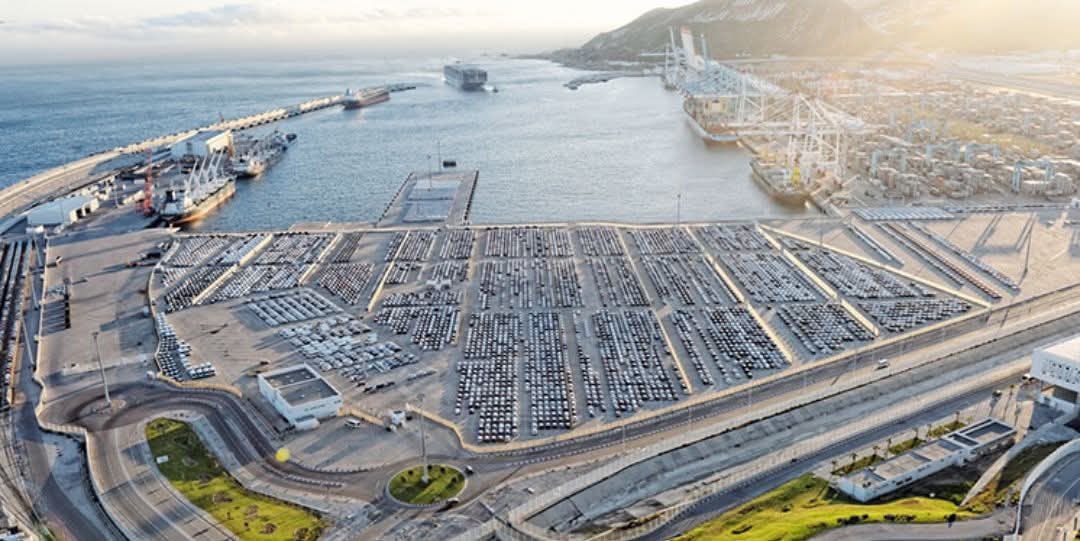
Another focal point of the Chinese report is the logistical efficiency provided by Tangier Med Port. Tire China highlights its proximity—just 14 kilometers from Spain—and its advanced infrastructure, which make it more competitive than many Eastern European logistics routes. The report states that Tangier Med has become one of Africa’s leading ports and increasingly a critical node for Europe-bound “green supply chains,” which require improved traceability, lower emissions and streamlined regulation.
Environmental and energy considerations also figure prominently in the Chinese analysis. Tire China notes that Europe’s new rules on carbon emissions, battery production and supply-chain transparency are forcing manufacturers to seek locations capable of meeting these standards. The report argues that Morocco is well-positioned due to its large phosphate reserves, essential for battery components, and its collaborations with the European Union on green hydrogen and renewable electricity. These elements, combined with Morocco’s infrastructure and trade agreements, form what the report describes as “a rare and globally advantageous industrial configuration.”
The platform also highlights Morocco’s long-term industrial policy as a distinguishing factor. Tire China observes that while many countries launch industrial plans that remain largely aspirational, Morocco has established a stable and predictable strategy over several years. This includes the development of industrial zones, logistics corridors, investment incentives and measures to ensure the security of foreign investments.
In its conclusion, Tire China frames Morocco’s rising industrial profile as part of a broader restructuring of global automotive and tire supply chains, in which the country is becoming a preferred base for companies navigating a complex mix of cost competition, regulatory requirements and environmental transitions. For tire manufacturers in particular, the report states that Morocco offers not only production advantages but also a gateway to high-value global supply chains connected to major European automakers.
The Chinese analysis ends with a clear message: companies that establish themselves early in Morocco will gain a decisive competitive edge as Europe’s automotive sector undergoes structural transformation. The report positions Morocco not as an alternative to traditional hubs, but as an increasingly central component of future tire and automotive production networks.