Casablanca – Morocco received a record level of financing from the African Development Bank (AfDB) in 2025, as the institution deepened its support for the country’s economic transformation through major investments in infrastructure, local development, entrepreneurship, agriculture, governance reforms, and climate-related projects.
According to figures presented during the African Development Bank’s 2026 Annual Meetings in Brazzaville, total commitments to Morocco reached approximately $1.41 billion in 2025, marking the highest annual level of financing ever provided by the Bank to the Kingdom.
The funding reflects the growing strategic partnership between Morocco and the African Development Bank at a time when the country is pursuing ambitious development programs aimed at strengthening competitiveness, modernizing infrastructure, supporting job creation, and accelerating the transition toward a more sustainable economy.
Infrastructure receives the largest share of financing
Transportation and connectivity projects accounted for the largest portion of the Bank’s commitments.
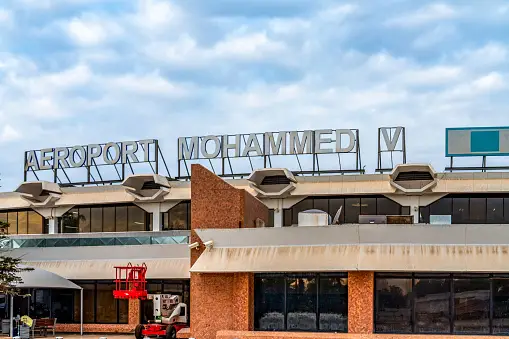
Approximately $457 million was allocated to infrastructure and connectivity initiatives, including around $294 million for the modernization of airports in Marrakech, Agadir, Tangier, and Fez.
The airport investment program includes the expansion of passenger terminals, construction of a new air traffic control tower in Marrakech, upgrades to airport circulation systems, and the deployment of advanced security and baggage-handling technologies.
The project is expected to improve operational efficiency and increase passenger-handling capacity as Morocco continues to experience growth in tourism and international air traffic. The modernization efforts are also aligned with the country’s preparations for major international events and its broader objective of strengthening transport connectivity.
Another $163 million was directed to the Municipal Equipment Fund (FEC), supporting local authorities in financing integrated territorial development projects.
The financing will contribute to investments in drinking water networks, sanitation systems, educational facilities, urban mobility projects, and public infrastructure, while incorporating environmental sustainability and climate resilience standards.
Support for governance and economic resilience
The African Development Bank also expanded its support for economic governance reforms and resilience-building measures.
Approximately $198 million was allocated to programs aimed at strengthening economic governance, improving performance in the water and energy sectors, and enhancing Morocco’s ability to manage external economic shocks.
These initiatives are designed to reinforce institutional efficiency, improve resource management, and support long-term economic stability amid an increasingly uncertain global environment marked by geopolitical tensions, climate risks, and changing trade dynamics.
Entrepreneurship and SME development
Promoting entrepreneurship and strengthening the private sector remains a central element of the Bank’s strategy in Morocco.
In 2025, around $130 million was mobilized to support micro, small, and medium-sized enterprises (MSMEs). The financing is intended to encourage business creation, improve access to funding, and strengthen the competitiveness of Moroccan companies.
The Bank views SME development as a critical source of employment generation and economic diversification. The initiative seeks to help entrepreneurs expand their activities while creating new opportunities for young people entering the labor market.
Investment in inclusive agriculture
Agriculture, one of Morocco’s most important economic sectors, also received substantial support.
The Bank allocated approximately $109 million to promote inclusive agricultural development, with a particular focus on rural entrepreneurship among women and young people.
The financing will support the modernization of agricultural infrastructure, facilitate access to financial services, and encourage the adoption of more productive and sustainable farming practices.
The initiative is expected to contribute to rural development, improve food security, and strengthen the resilience of agricultural communities facing increasing climate-related challenges.
“Skills 2030” program targets human capital development
Among the most significant projects approved during the period was the “Skills 2030” program, which received approximately $218 million in financing.
The initiative aims to improve employability among young people and women while addressing skills gaps across key sectors of the economy.
The program combines workforce training, stronger employment integration mechanisms, and the digital transformation of vocational education systems. By aligning training more closely with labor market needs, authorities hope to improve employment outcomes and strengthen Morocco’s human capital base.
The project reflects growing recognition that workforce development will play a crucial role in sustaining economic growth and enhancing competitiveness over the coming decade.
Green financing supports industrial transition
The Bank also reinforced its support for Morocco’s environmental and industrial transformation through a major operation involving OCP Group.
A partial credit guarantee worth approximately $490 million was signed in favor of the company. The mechanism is expected to facilitate the mobilization of up to $577 million in additional green financing from international partners.
The funding will support OCP’s long-term investment strategy aimed at reducing greenhouse gas emissions, increasing the use of renewable energy, improving water management, and enhancing energy efficiency across its industrial operations.
The initiative forms part of broader efforts to establish a low-carbon industrial model while strengthening Morocco’s position in sustainable fertilizer production and green industrial development.
Morocco remains a key partner for the AfDB
The record financing package comes as Morocco continues to strengthen its position as one of the African Development Bank’s most important partners on the continent.
At the institution’s 2026 Annual Meetings, officials highlighted the need to mobilize large-scale resources to finance Africa’s development in an increasingly fragmented global economy. Morocco’s experience was frequently cited as an example of how targeted investments in infrastructure, industrialization, human capital, and sustainability can support long-term economic transformation.
The Bank has also expressed confidence in Morocco’s economic outlook. Recent assessments project continued growth supported by household consumption, infrastructure spending, tourism, manufacturing, agriculture, and private-sector investment.
With more than $1.41 billion committed during 2025 alone, the African Development Bank’s expanding involvement underscores its confidence in Morocco’s development trajectory and its role as a key destination for development finance in Africa. The financing package reflects a broad strategy focused on improving infrastructure, strengthening local economies, promoting entrepreneurship, enhancing workforce skills, and supporting the country’s transition toward a more resilient and sustainable growth model.